


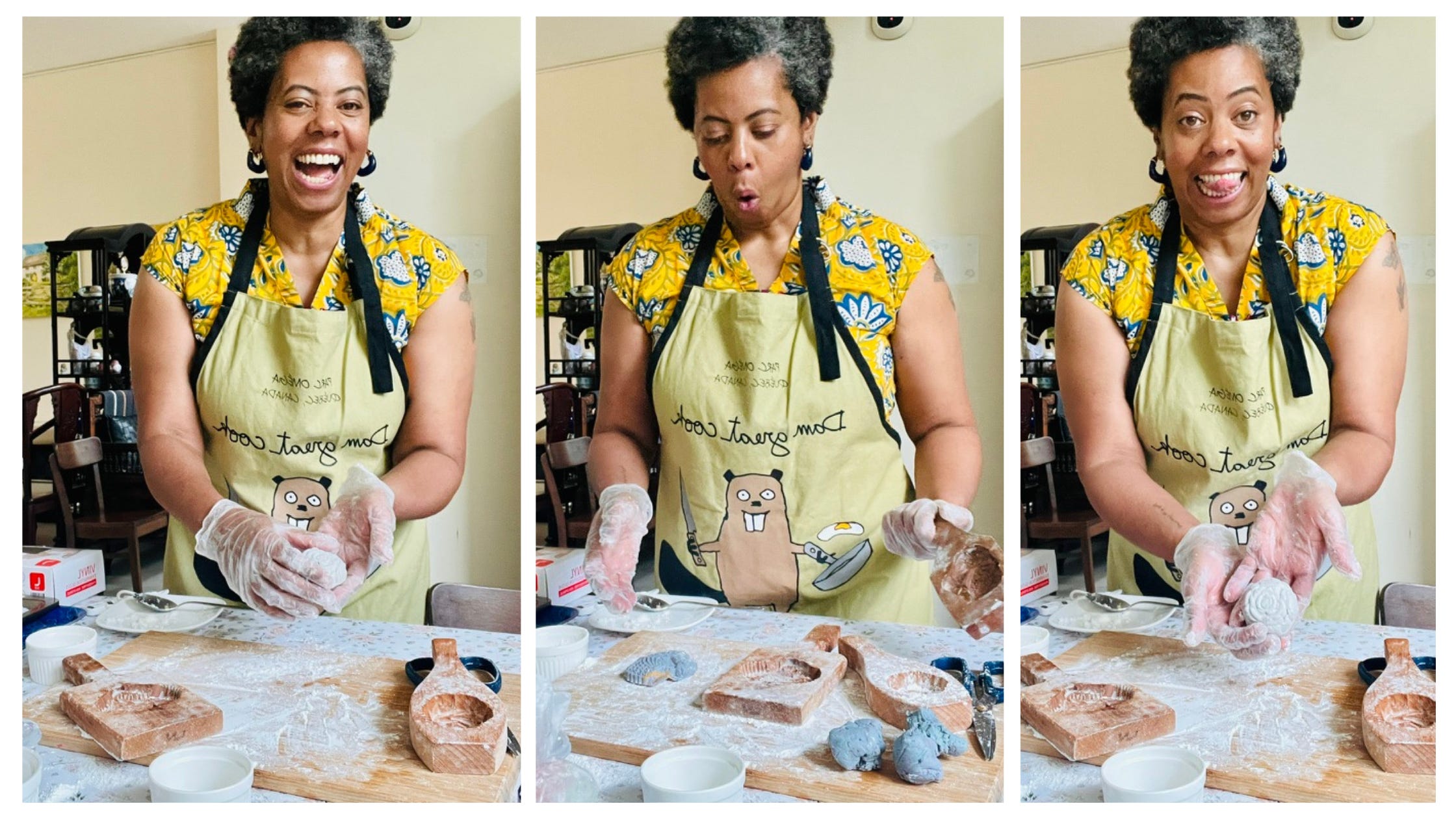
I overslept due to jet lag, was hungry, and slightly disoriented. When I walked into Jasmine’s home, she was already moving at full speed—telling stories, pulling out molds, pouring me homemade dragonfruit and fig, explaining ingredients, shifting between history and technique so quickly that I almost couldn’t keep up.
It felt less like a class and more like being dropped into a magical living archive. And somehow, in the middle of all that, we made delicious edible art.
Finding the Class
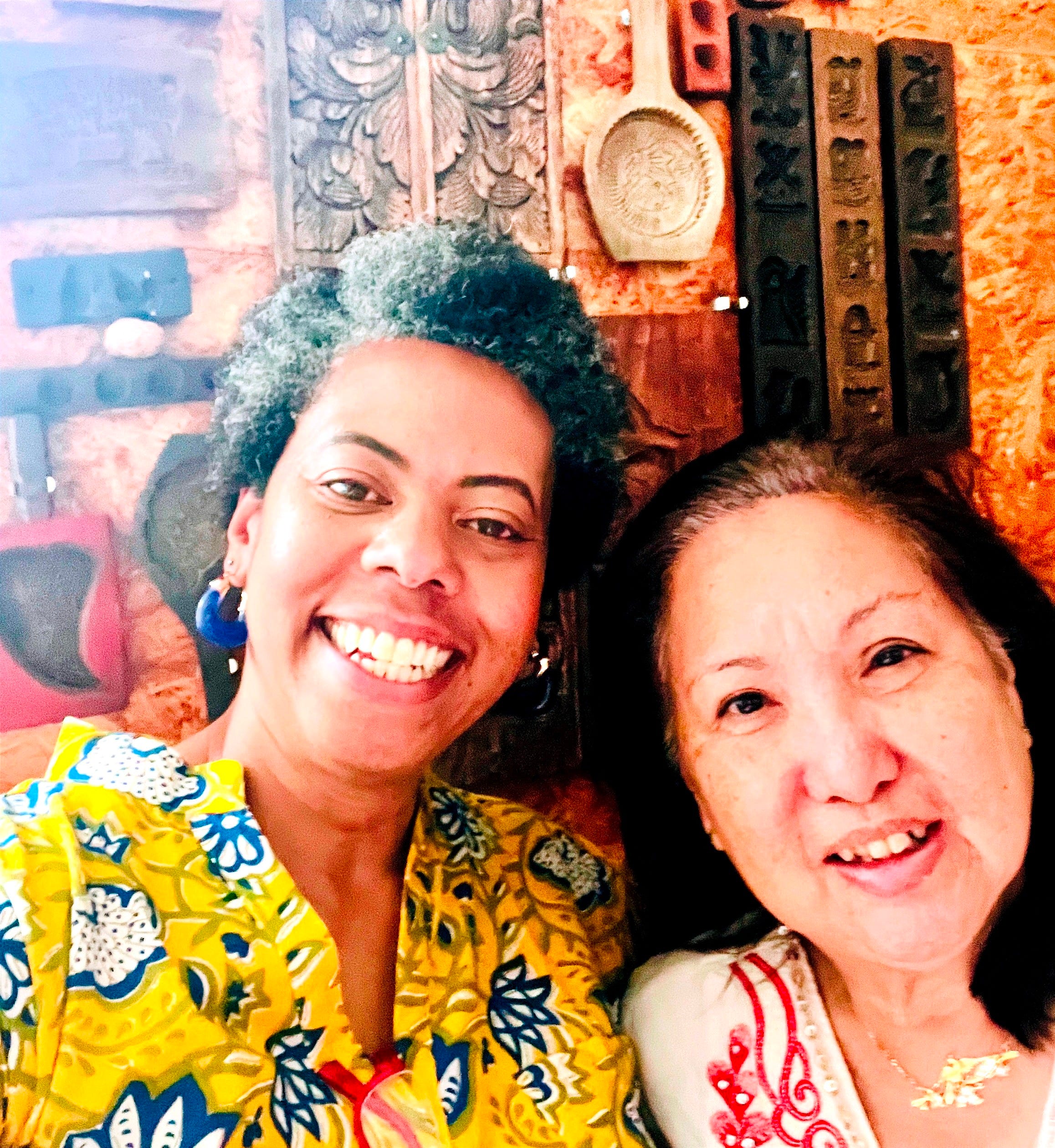
I found Jasmine through a Singapore-based platform called Seek Sophie, which curates experiences with local artists, makers, and cultural practitioners—almost like Airbnb experiences, but specifically for craft, culture, and hands-on learning.
Jasmine’s class wasn’t framed as a typical cooking class. It was positioned as a way to understand food history through objects—specifically, traditional molds used across centuries and cultures to shape sweets, cookies, breads, and snacks.
Entering Jasmine’s World
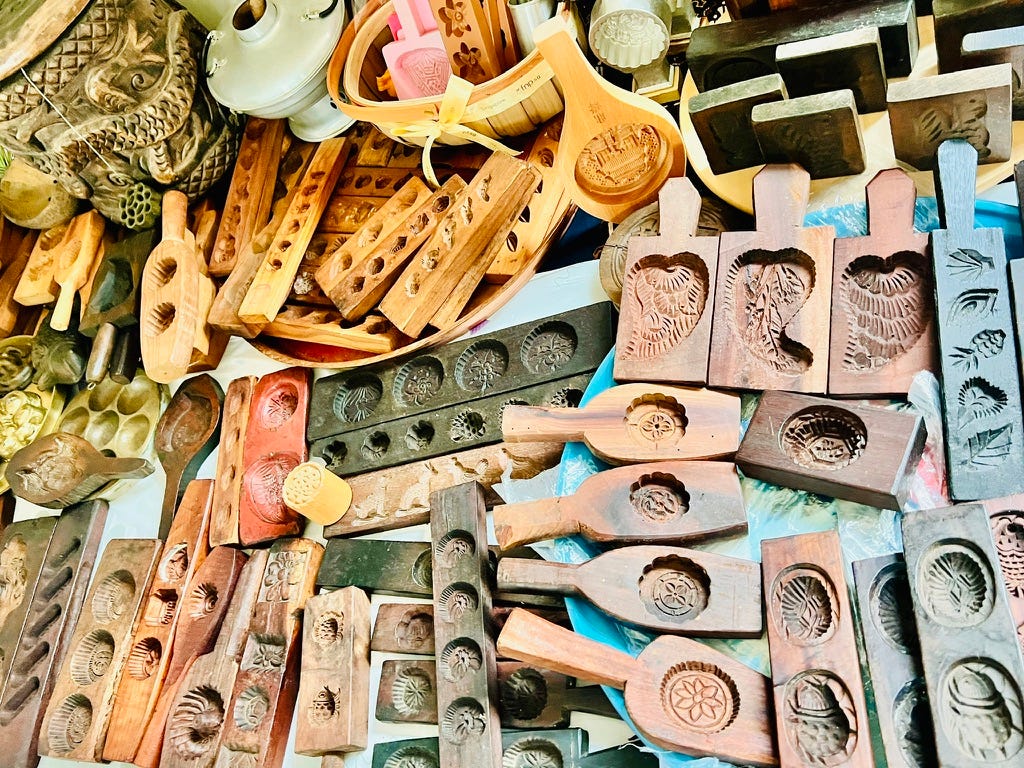
Jasmine’s home felt like a bright, cozy, sun-filled museum. Everywhere you looked, there were molds—hundreds of them—wooden, brass, hinged, double-sided, some opening like books, some huge, and some tiny. Each one had a story. Not just where it came from and how it was used, but how she found it, who gave it to her, and what it meant. She’s been collecting them for over 20 years.
She describes herself not as a chef, but as a culinary historian, and that distinction matters. Being with her wasn’t really about mastering a strict recipe—it was more about understanding the cultural meaning embedded in everyday objects. At one point, she told me:
“The shapes of the molds represent the hopes, beliefs, and aspirations of the cultures they come from.”
Peranakan Culture: Flamboyant and Layered
Jasmine is Peranakan, which she described as similar to Creole culture—a blend shaped by migration, trade, and colonization. She called it “flamboyant and baroque,” and you could see that immediately in the food. Nothing was simple. The flavors were complex and layered. The colors were intentional. The forms were intricate. Even a small snack carried aesthetic and symbolic weight.
It immediately made sense to me as an artist—this idea that culture expresses itself not just in flavor, but in form.
The Molds (and Their Stories)
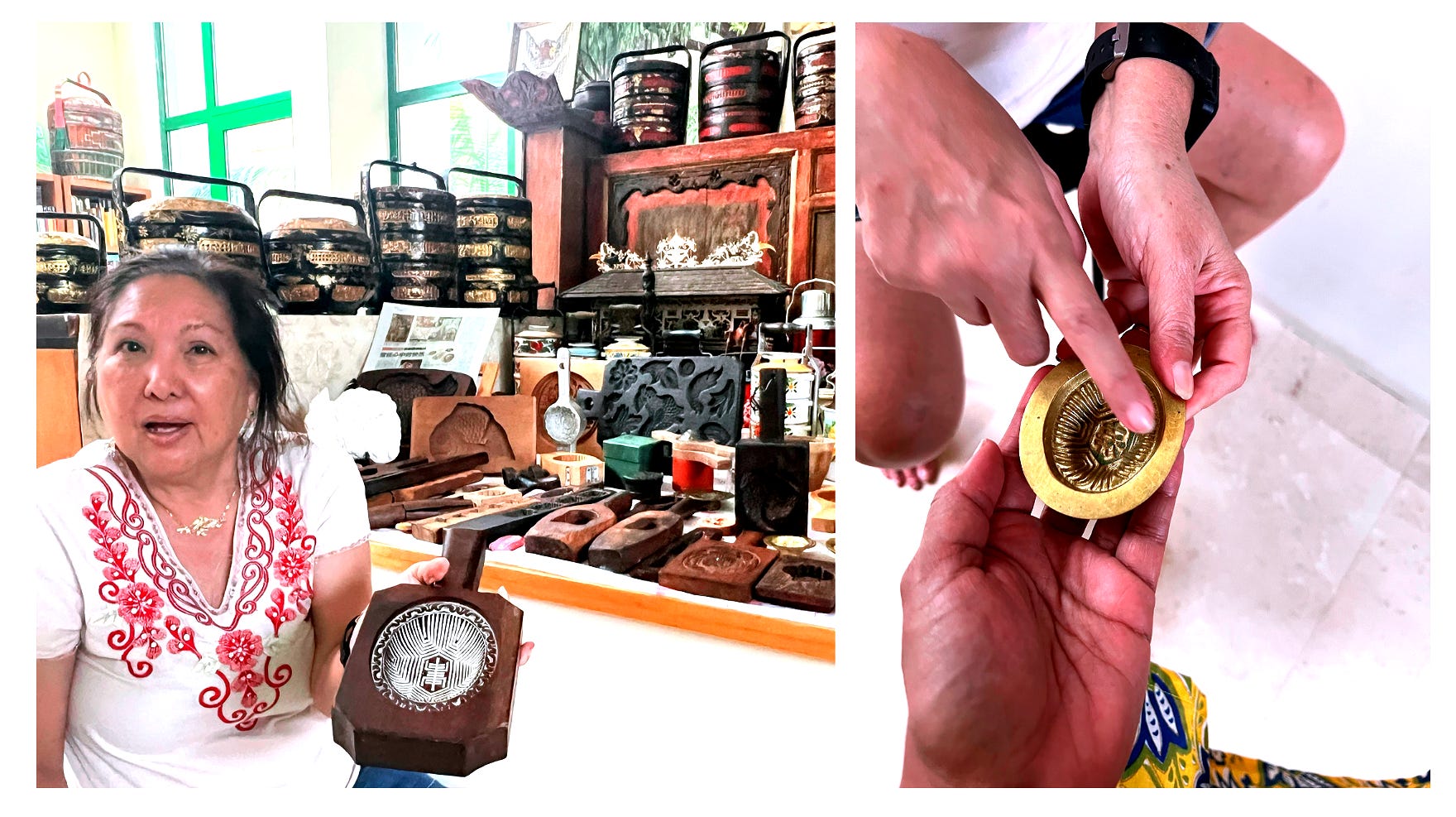
The most common mold in her culture is the turtle—symbolizing longevity. She had dozens of them, each slightly different, some carved in wood, others cast in brass.
But the collection stretched far beyond that. She showed me:
A Nordic mold of a boy and a girl used as a kind of edible love gesture
Greek bread stamps filled with religious symbolism—body, blood, apostles
Molds with hinges, molds that pressed from both sides, molds that opened like books
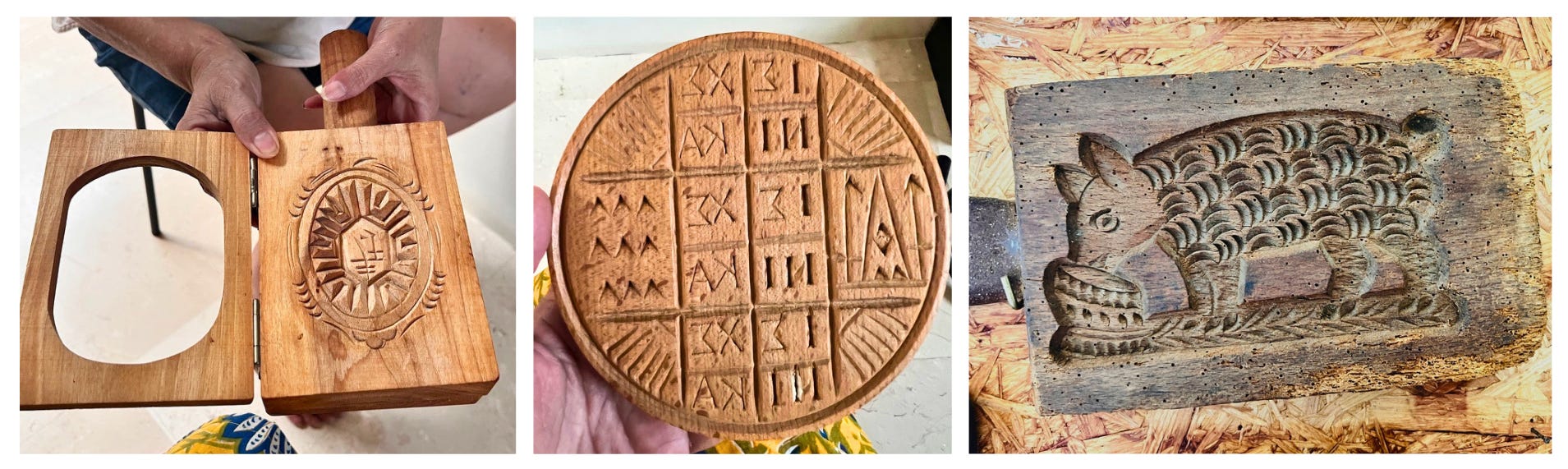
Each one was a design system, a cultural artifact, a way to hold history, and a storytelling tool all at once.
Making Ang Ku Kueh (or Trying To)
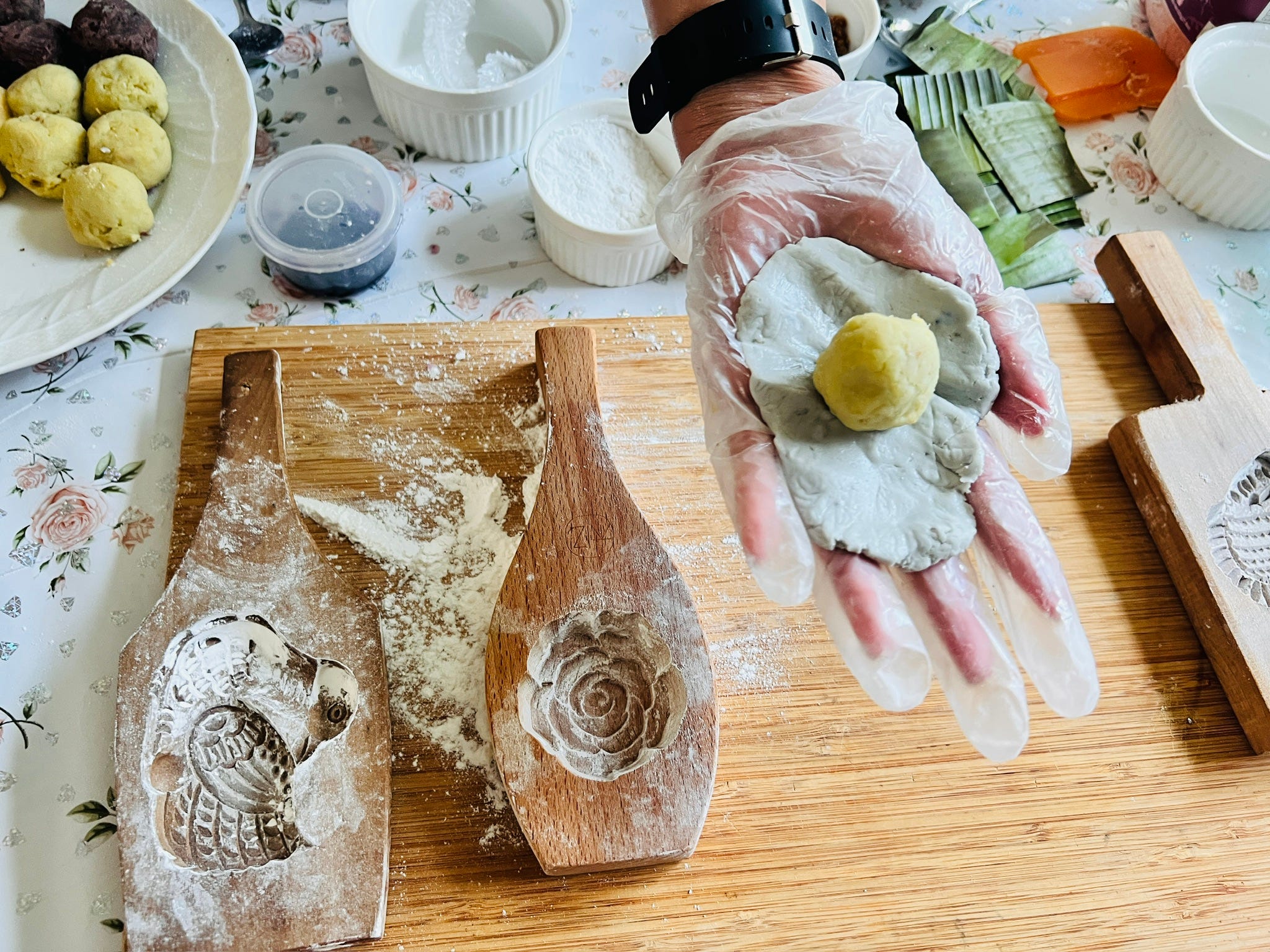
Then we started cooking. Or more accurately, I tried to follow along as Jasmine moved through a process that clearly lives in her memory, ancestry, and body, not on the page. We used beautifully carved wooden molds in the shapes of roses, ducks, fish, and pears.
There were so many ingredients: tapioca starch, natural dyes from steeped Clitoria ternatea (butterfly pea) flowers, vanilla sugar, and banana leaves. She let me photograph the recipe, but it was covered in handwritten notes, adjustments, and improvisations. When I asked her how she learned to make kueh, she almost couldn’t answer. She said it was something you just knew how to do as a Peranakan.
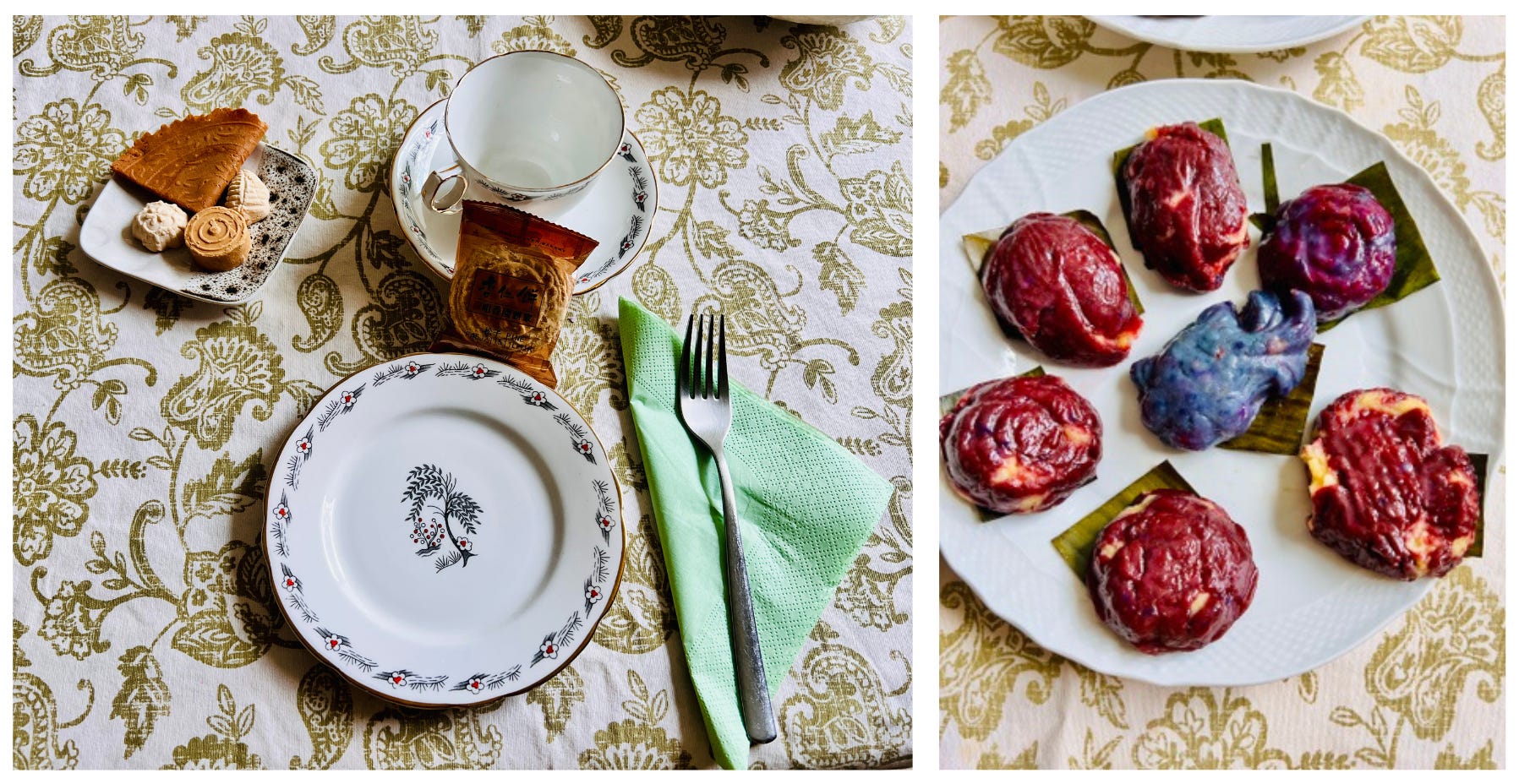
We made four different types of Ang Ku Kueh. Two had savory fillings: peanut and salty mung bean, and two were sweet: coconut and sweet mung bean. Jasmine kept track of the fillings by color-coding the doughs with her handmade dyes.
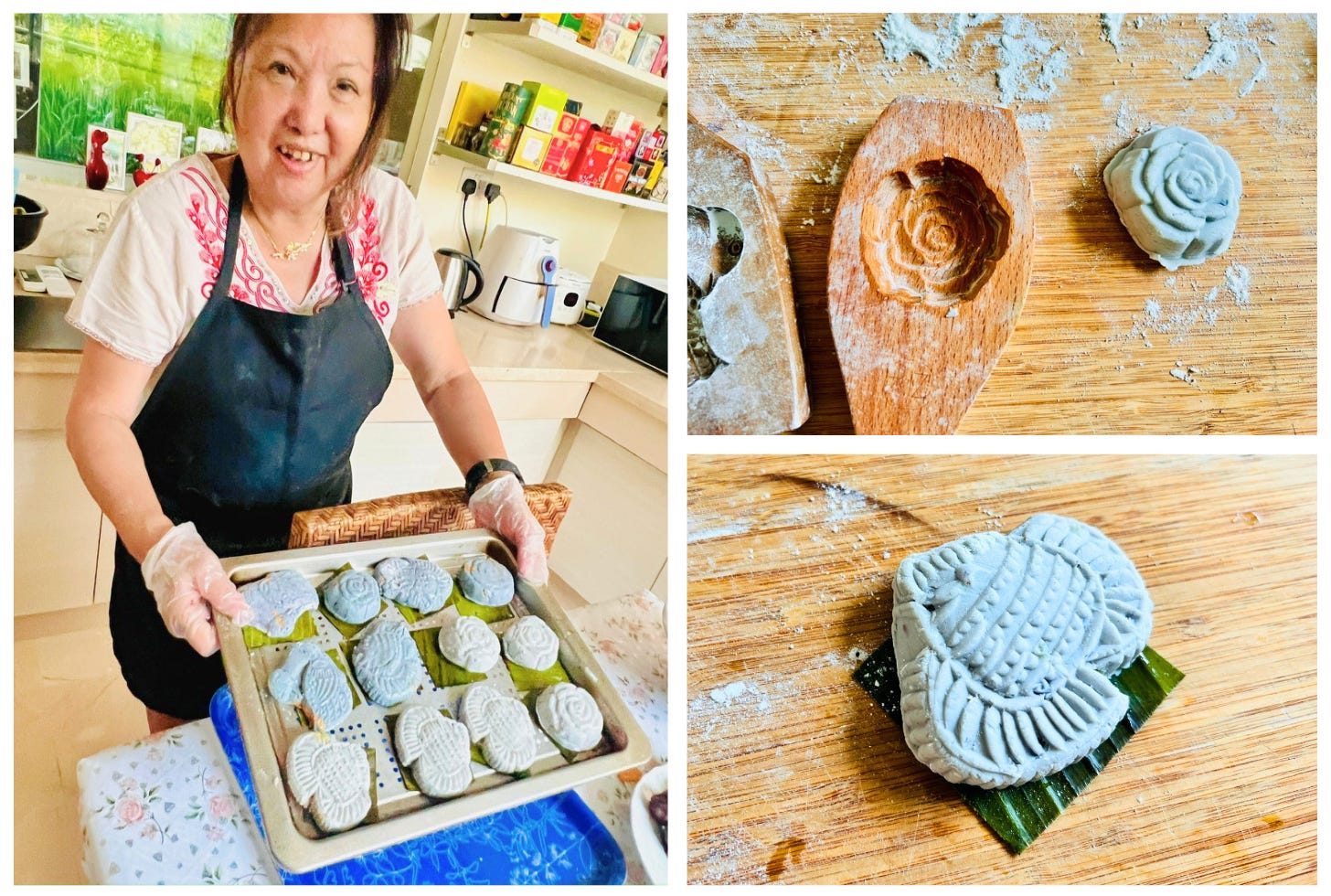
At one point, she told me that since I lived in New York City, I could find everything I needed to make my own kueh at an Asian market. I was very skeptical and told her that my daily cooking routine often includes scrambled eggs or peanut butter and jelly sandwiches.
She just looked at me with pity and laughed.
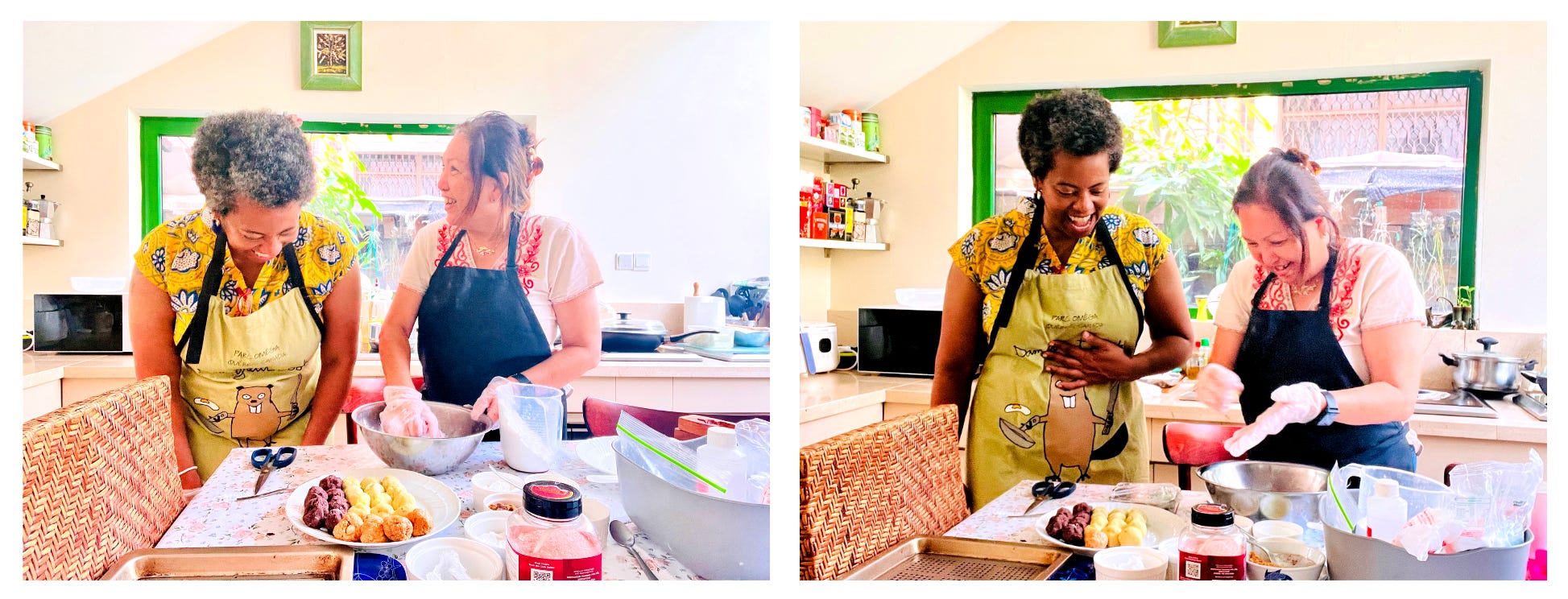
A Familiar Way of Thinking
What clicked for me wasn’t just the food—it was the system.
Molds are a form of design. A way of encoding shape, meaning, and repetition into an object that can be used again and again. As someone who works across digital fabrication, 3D printing, mixed media, and handmade processes, I couldn’t stop thinking about them.
When I mentioned this to Jasmine and told her about some of my 3D printing projects, she immediately leaned in. She started talking about collaboration—about co-designing molds, and crossovers between my practice and hers.
It felt less like a casual idea and more like the beginning of something.
Eating, Slowing Down
After all that intensity, everything shifted.
The table was set beautifully with a batik tablecloth and china. The steamed kueh looked vibrant and sculptural, each resting on its own banana leaf square on a silver platter.
Her granddaughter came downstairs and joined us, though she was most interested in the dragonfruit and winter pear jelly cake Jasmine had made earlier from a Midwestern-style cranberry mold.
We sat, ate, and talked. We had sweet and savory kueh, and klepon—soft rice balls filled with molten palm sugar and rolled in coconut, served warm so the sugar melted in your mouth.
The food was incredible, but what stayed with me was the feeling of being welcomed into a space that was both deeply personal and deeply cultural.
What a privilege.
I went in thinking I was taking a cooking class. What I actually experienced was a living archive of cultural objects, a lesson in how design carries meaning across cultures and time, and a reminder that tools—especially simple ones—hold stories.
Dragonfruit and fig?! Yes, please. And, “culinary historian,” so true that food holds history. Thank you for sharing this!